2.7 April Seminar Critique Notes and Critical Reflections
- kerincasey
- Apr 23, 2024
- 4 min read
My two critiques were quite different, which kind of threw me for a start, but on reflection it was really useful. Some provocations emerged that are helping me find a way forward, as the three pieces that I presented were relatively resolved.
Notes from Critique One
Group: Sally, Mike, Natasha, and Phong, with Glen Snow supervising.
· Describing what we see: objects, metallic colour, organic shapes
· Objects that speak of relationships
· “Bronzer” has a proximity that holds the two pieces together
· Object and surface interplay – why?
· They are creating a form that holds space, but we are very conscious of the surface
· Phyllida Barlow – she felt that the insides are also revealed as the surface as well
· The forms are bounded but not permanent
· These objects feel like they are on the move
· Mike: Springiness to the form, we can imagine them unfolding – they are on the move
· Plywood is flexible but has been made to resemble metal (see Dave McCracken metallic objects)
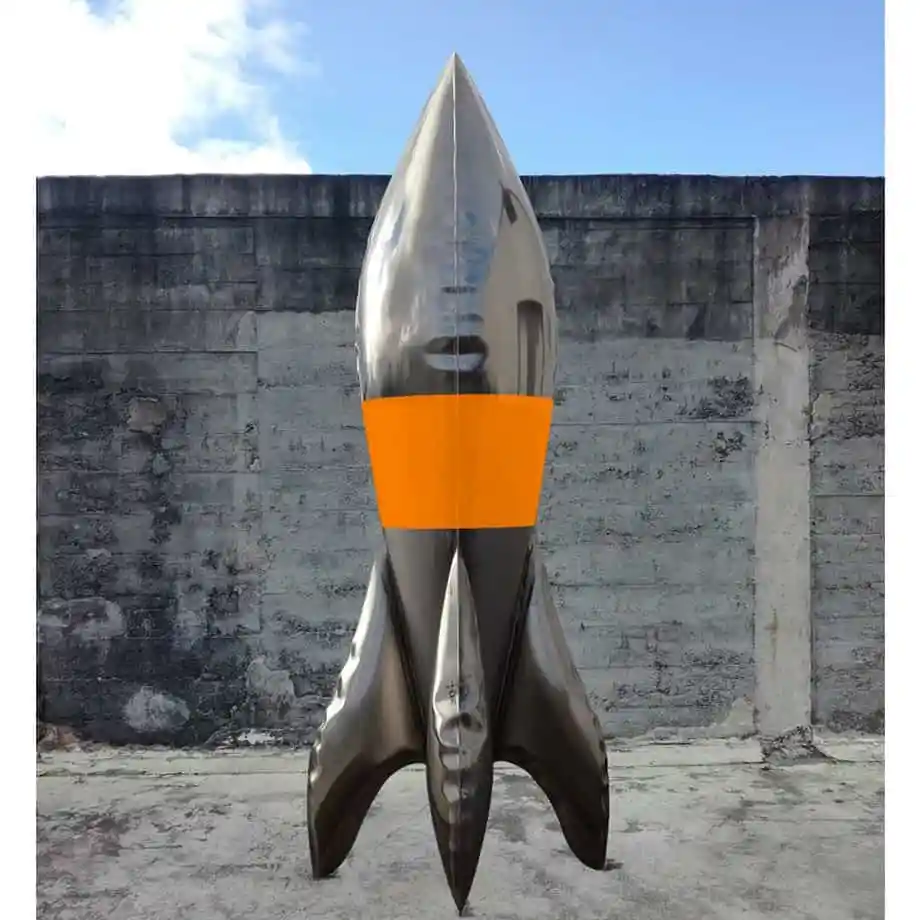
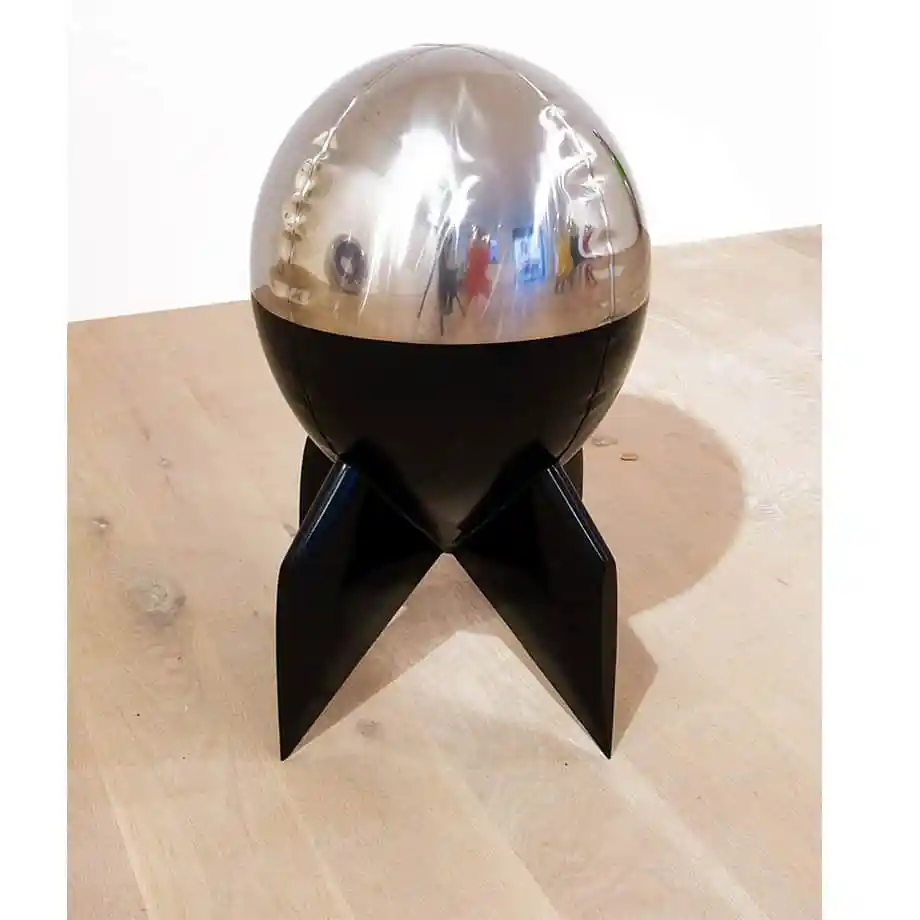
Dave McCracken, Agent Orange, Dace McCracken, Liston, stainless steel
stainless steel industrial coating, 2.2m. industrial coating, 80cm.
· But we can still read the ‘woodness’, they’re not trying to deceive. It’s using the way it looks metallic to enhance our reading of it.
· Precariousness (especially the silver one) to the poise, the way they hold their position. A tension to them.
· Almost a character to the forms, ‘personas’, we perhaps make the comparison to the body.
· Almost a disposition to each one – ‘haughty’ (bronze), ‘reclining’ (green) etc
· The metallic look makes them seem strong
· Feels like one could add another layer and it would still hold
· Glen: It’s showing us one possibility but there could be others. The slots help with this understanding
· Almost a suggestion that all three could be connected or interchangeable


· I then changed the 'arm'-like panel in the silver work to the opposite side.
· Suddenly looked Dadaist in the opening out of the silver work
· Inviting you in with open arms
· Tactile – green work reminded Mike of this Henry Moore sculpture


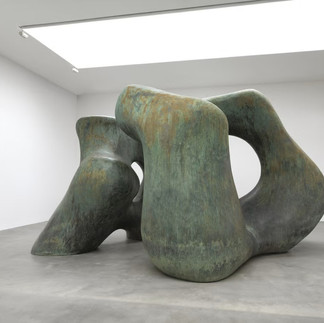
Henry Moore, Large Two Forms, 1966 Henry Moore, Large Two Forms, 1966, at Gagosian
· Large scale – walking round and through feeling
· The interplay with the wall and the ground worked well in Bronzer
· What it seems to point to is the scale could even stay the same but perhaps they could interweave together
· Sally could see them going even larger
· Glen felt like they had finally ‘arrived’ in terms of scale. The scale of my previous works felt like maquettes for larger works, but these ones felt like they were the actual thing because they had achieved their ‘right’ scale.
Notes from Critique Two
Group: Elise, Yvonne, and Nick, with Julian Hooper supervising. (George was away sick).
· Elise – use of the space / would like to see more of the tension and the actual fixtures to
see more push and pull and connection between the forms.
· “odd colours”, in-between colours. Like the metallic tone and reflective nature of that.
· Hangover / slumping effect of green work.
· Still feels architectural.
· Julian – something quite human, almost figural.
· Furniture / chair feeling.
· Arms wrapping.
· Mummified / Simon Denny

Simon Denny, Remainder 2, 2019
· Tendril – reaching out
· Scale – always this big? Earlier iterations.
· Light and delicate like paper.
· Cyclops eye of the slit in the green one is good.
· Incision encourages interaction.
· Would you consider adding other materials?
· Will the time come when you will add to the materials? Pliable.
· Like to see paint layers / variation in the surface quality
· J - How do you see them sitting in art history? Spoke about modernism.
· Pristine nature corrupted. Deterioration over time. Weathered. General nature of the conversation: “Mess with it.”
· Nuances and traces. Commendable that you’ve held to the aesthetic. Spoke about the smaller ones from February having more variation.
· What are the rules in your work?
· Working from an offcut useful – takes me out of the aesthetic decision making. Looking for something more irrefutable and matter-of-fact.
· Value judgement – it starts to interest me when it surprises me and I wondered how I made it.
· Richard Serra – putting the human against the work – barriers, formidable scale etc.
· Cutting another slot – consider more.
· They feel slightly passive and still – slot animates the work.
· Body references – more over? Would you make things more representational?
· Rearranged the silver work – more menacing, more temporary
· Unfurling, agitated – add blocky hand or suggestion of fingers (I gave that a hard no)
· I would rather nudge and hint at an idea than be literal.
· Mark making same brush. Phyllida Barlow. More haphazard.
· Woodgrain?
· Room to complicate your practice.
· Shapes can reform the space / disrupt the space, create barriers, be more imposing and confrontational.
· Stripped back further. Minimalist austerity.
· Wall and floor (like Bronzer) – more potential to have one work incorporating both more rigorously.
· Len Lye.
Critical Reflections with Noel
· What wasn't coming through in the critiques as well as it should was the idea of agonism and working in a 'finished for now' way.
· Letting the work rest in a state of abeyance – pending further inquiries
· Thinking about the paint finish (top-coat / under-coat) and how this affects the reading of the work
· Sanding back and putting together – re-configuration
· Between Modernist ‘hand’ and Minimalist ‘absence of hand’
· Repetition of movement
· The material facts of the work are still too seamless
· They need to be caught in a the moment of made and unmade
· Like a car that’s been to the panel beaters – it’s left in an unfinished state, but you know it’s going to be painted at some point.
· Don’t fetishize a faux patina
· Look at Richard Artschwager – faux grain
o A surface treatment as a signifier
o Representation / simulation
o Not just an affect – it’s anchored in the idea of the work
· Consider the space of the exhibition is the space of partial making
· A feeling for being open to another proposition in the way it presents
· Look at Helen Johnson – loosen ideas - unknot


Comments